
- Osmolality measures how concentrated a lubricant is. WHO's ideal is 380 mOsm/kg or less; 1,200 is only an interim upper limit.
- WHO says most commercial lubricants are 2,000 to 6,000 mOsm/kg, far above vaginal fluid (260 to 290).
- pH should be about 4.5 for vaginal use; healthy vaginal pH is 3.8 to 4.5.
- The brand numbers here come from 2010 to 2014 tests; formulas change, and the same brand varies between labs.
- Treat it as a guide, not a pass or fail grade.
Two terms come up whenever people talk about gentle lubricants: lube osmolality and pH. They sound technical, but each has a simple meaning, and understanding them helps you read between the lines of marketing claims.
This guide explains what the WHO recommends, shows how popular brands measured in published tests, and flags what we do not know. All brand numbers are from studies done between about 2010 and 2014, so current formulas may differ. They are not medical advice, and they are not a ranking of which product to buy.
Lube osmolality in plain English
Osmolality tells you how many dissolved particles are packed into a lubricant, measured in milliosmoles per kilogram (mOsm/kg). When a gel is much more concentrated than your own tissue fluid, it can pull water out of the cells it touches. That is why very high osmolality is linked with irritation in lab models.
The WHO guidelines, set out in an advisory note with UNFPA and FHI 360, give two reference points. The ideal osmolality for a lubricant should not exceed 380 mOsm/kg to minimize any risk of epithelial damage. For procurement, they set an interim upper limit of 1,200 mOsm/kg. For context, vaginal secretions are about 260 to 290 mOsm/kg and semen 250 to 380.
The main driver of high osmolality is often glycerin and other glycols. To stay under 1,200, WHO suggests no more than 9.9% glycerol or 8.3% propylene glycol by weight.
Where popular lubricants landed
The chart marks products from the WHO note's Annex 1 (data from Begay et al. 2011) on the scale from 0 to 8,500. Green is the WHO ideal zone, yellow the acceptable zone and red above the interim limit.
Osmolality of popular lubricants (tested c. 2010)
Of the 25 products in that annex, only 5 were at or below 380, 1 was in the middle zone and 19 were above 1,200.
25 lubricants by WHO osmolality zone
The pattern repeats across studies. A 2014 paper tested 12 vaginal gels, mostly European: 7 of 12 exceeded 1,200 mOsm/kg and none reached 380. A 2012 study of water-based gels found 6 of 10 hyperosmolar.
The same brand is not always the same number
One of the most important caveats: different labs and batches give different values. K-Y Jelly measured 2,007 in one study, 2,463 in another, 2,510 in a third and 3,631 in a fourth. Treat these as ranges, not product specifications.
Osmolality in a second study (water-based gels, 2012)
Selected products, mOsm/kg
That study found that hyperosmolar gels reduced tissue viability and caused epithelial fracture and sloughing. The two near-iso-osmolar gels and both silicone products performed best in the safety testing algorithm.
A slug mucosal irritation model also tracked osmolality closely: FemGlide at 32 mOsm/kg caused no irritation signal, PRÉ at 316 caused no change, Replens at 2,143 mild irritation, K-Y Jelly at 2,463 moderate irritation, and Astroglide at 5,848 severe irritation. That was an animal model, so human results may differ.
Lube pH: the other number
pH measures acidity. A healthy vaginal pH is about 3.8 to 4.5, while the rectum is close to neutral at about 7. WHO's 2012 advice was a lubricant pH of about 4.5 for vaginal use, 5.5 to 7 for rectal use or unknown use, and nothing above 7. WHO's later revision (2020) changed the pH specification; we could not verify the new values, so treat the 2012 numbers as a historical guide.
| Product (tested c. 2010) | Osmolality (mOsm/kg) | pH | Zone |
|---|---|---|---|
| Slippery Stuff Gel | 13 | 6.89 | ✓ Ideal osmolality |
| FemGlide | 15 | 6.13 | ✓ Ideal osmolality |
| Moist Again | 187 | 5.68 | ✓ Ideal osmolality |
| Probe | 341 | 7.67 | ✓ Ideal osmolality, pH above 7 |
| Duane Reade Lubricating Jelly | 737 | 4.79 | ~ Acceptable |
| Durex Play More | 1,332 | 4.49 | ✗ Above 1,200 |
| Replens | 1,491 | 2.98 | ✗ Above 1,200, acidic |
| KY Jelly | 2,007 | 4.55 | ✗ Above 1,200 |
| Astroglide Gel | 2,299 | 4.30 | ✗ Above 1,200 |
| ID Glide | 2,901 | 5.20 | ✗ Above 1,200 |
| KY Sensual Silk | 5,467 | 3.39 | ✗ Above 1,200, acidic |
| Astroglide Liquid | 8,064 | 4.44 | ✗ Above 1,200 |
Source: WHO/UNFPA/FHI360 2012, Annex 1 (Begay et al. 2011)
Notice that a good pH does not guarantee a good osmolality: Astroglide Gel has an ideal-looking pH of 4.30 but an osmolality of 2,299. Likewise, Probe has a low osmolality but a pH above 7.
How to use this when you shop
Most brands do not print osmolality on the pack, so the best practical steps for choosing a body-safe lube are:
- Prefer short ingredient lists and be cautious with products high in glycerin or propylene glycol, which tend to raise osmolality.
- Look for brands that publish osmolality and pH. Some fertility and sensitive-skin lubricants do.
- Use extra care for sensitive tissue, postmenopausal dryness or rectal use, where the lining is more delicate.
- Silicone lubricants contain little or no water, so osmolality does not apply in the same way. Both silicone products in the 2012 study did well in safety testing.
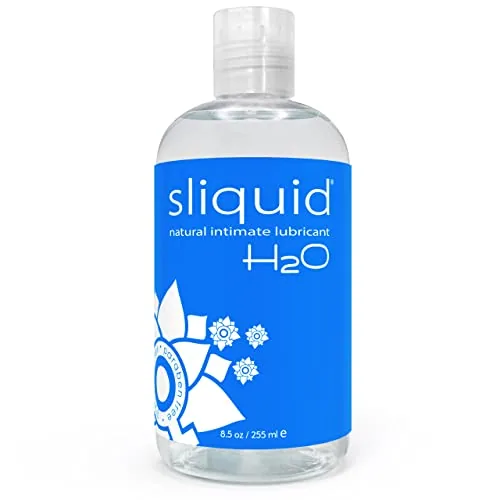
Sliquid H2O Water-Based Lube, 8.5 oz
- Glycerin & paraben free
- Fragrance free & vegan
- Toy & condom compatible
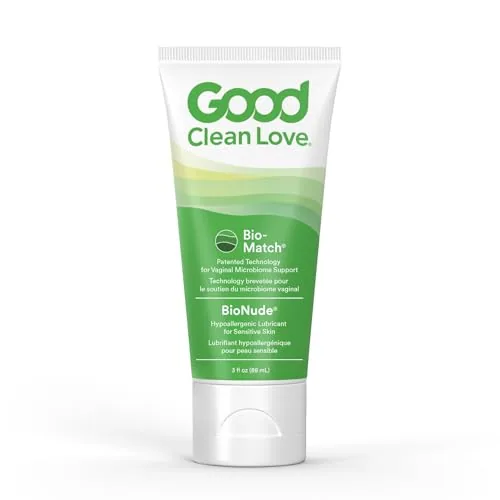
Good Clean Love BioNude Ultra Sensitive, 3 oz
- Glycerin & paraben free
- Unscented, unflavored
- Hypoallergenic
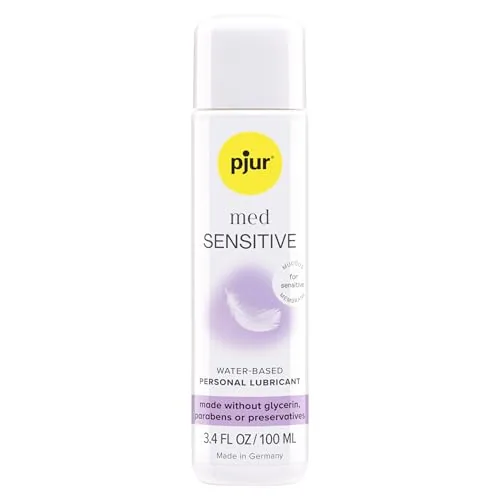
pjur med Sensitive Water-Based Lube, 3.4 oz
- Glycerin & paraben free
- No preservatives
- For sensitive skin
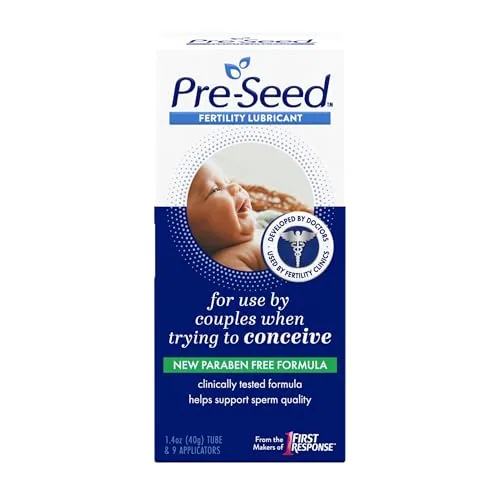
Pre-Seed Fertility Lubricant, 9 Applicators
- Fertility-friendly
- Isotonic, pH balanced
- Prefilled applicators
For more, see our sensitive skin guide, fertility-friendly guide and sensitive skin category. The makers of Sliquid H2O describe it as free of glycerin, glycol, parabens and propylene glycol, and pjur med Sensitive as free from glycerin, parabens and preservatives.
Other ingredients WHO flags
- Nonoxynol-9: WHO says spermicidal additives have significant irritant effects and are not recommended.
- Polyquaternium-15: avoid, based on in-vitro HIV-1 replication data.
- Preservatives: parabens are the most common lubricant preservatives and can irritate some people, while FDA says it has no information showing parabens in cosmetics affect health.
- Chlorhexidine: a less common preservative; K-Y Jelly was toxic to Lactobacillus in vitro, but the study did not isolate this ingredient.
Questions
What is a good lube osmolality?
WHO's ideal is 380 mOsm/kg or less, similar to vaginal fluid at 260 to 290. Its interim upper limit is 1,200 mOsm/kg.
Is high osmolality dangerous?
In lab tests, very high osmolality gels damaged tissue models and irritated animal mucosa. Real-world effects are less clear, and most products sit above the WHO ideal.
What pH should a vaginal lubricant have?
WHO's 2012 advice was about 4.5 for vaginal use, matching a healthy vaginal pH of 3.8 to 4.5. A 2020 revision of the specification exists but its values are not verified here.
Are the brand numbers up to date?
No. They come from tests around 2010 to 2014 and the same brand differs between labs, so use them as rough context.
Does glycerin raise osmolality?
Yes. Glycerin and other glycols are the main drivers, which is why WHO gives glycol limits for staying under 1,200.
What is isotonic lube?
An isotonic lube has an osmolality close to that of body fluids, which is about 260 to 290 mOsm/kg for vaginal secretions. WHO says most commercial lubricants are far higher, so look for the lowest numbers you can find.